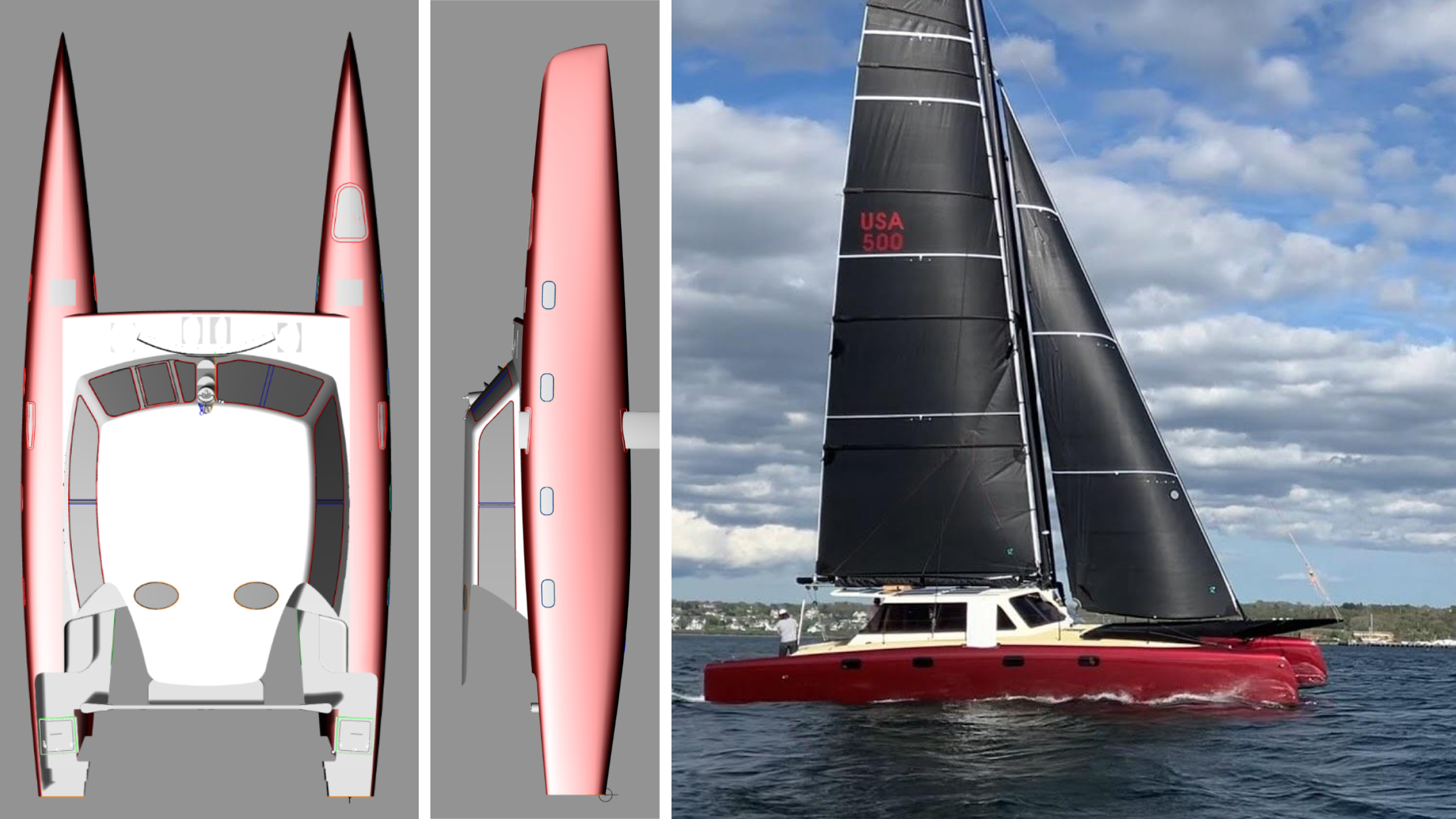
The Duende build was a one-off, custom 50ft catamaran designed for luxury and speed. The idea behind it was to maximize usability for singlehanded sailing. All necessary controls and components are accessible from the captains tiller in a way that emphasizes direct feel and feedback while sailing. This setup was designed to combine the performance of a big boat with the responsive feel and agility of a dinghy.
As a team, we worked closely with engineers and designers to fulfill the customers wishes. They wanted to keep the look and feel of an elegant touring yacht while hosting friends and going on family trips, while also being able to remove furniture and other comforts to optimize performance for racing.
Duende
Mold Design and construction
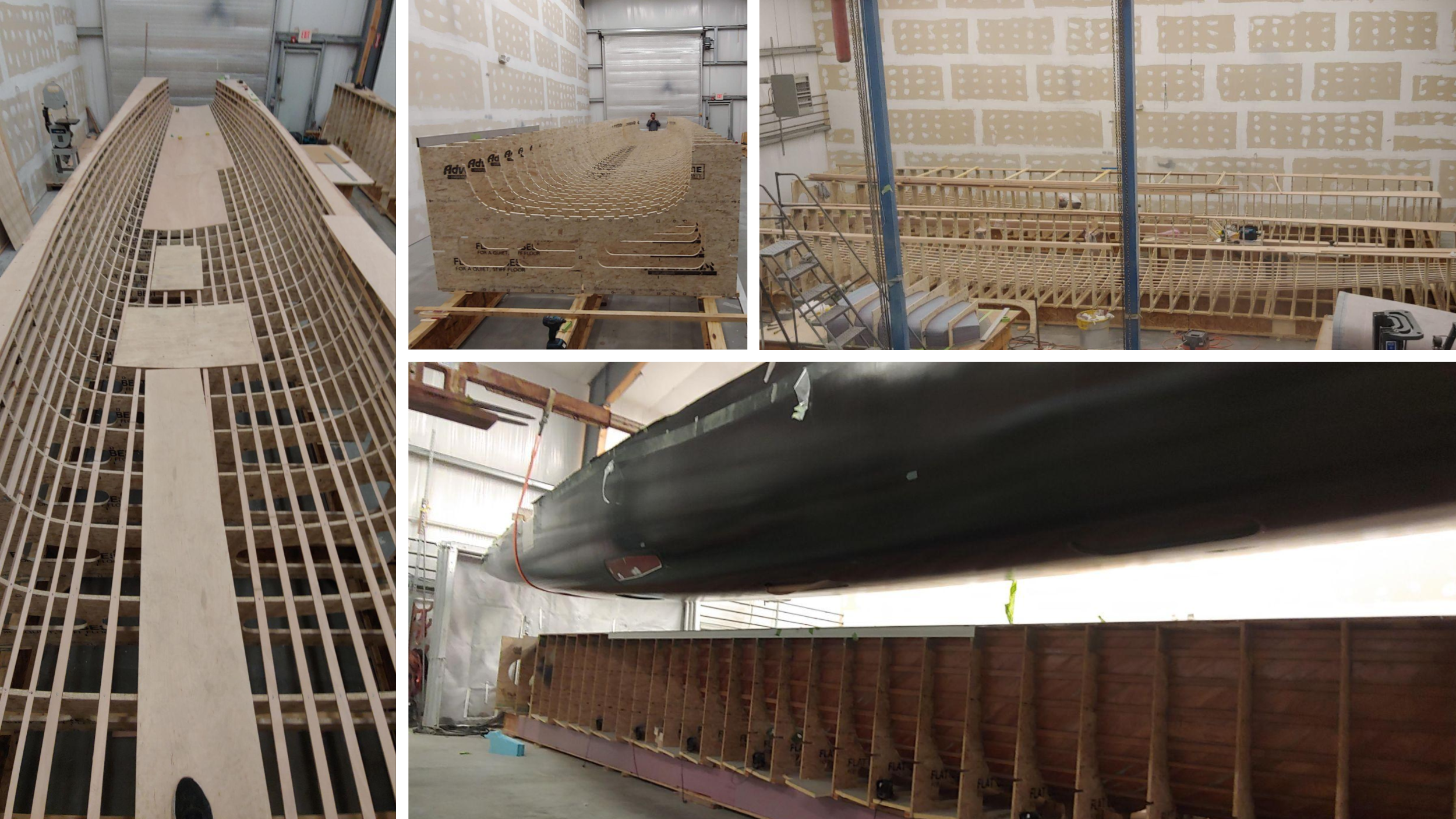
During this stage of the build, I was responsible for mold design, determining how the yacht was going to be divided into individual parts for ease of construction and future assembly.
Here the hull molds are being assembled and half of one hull is being released from the mold.
Navigation lights, design and fabrication
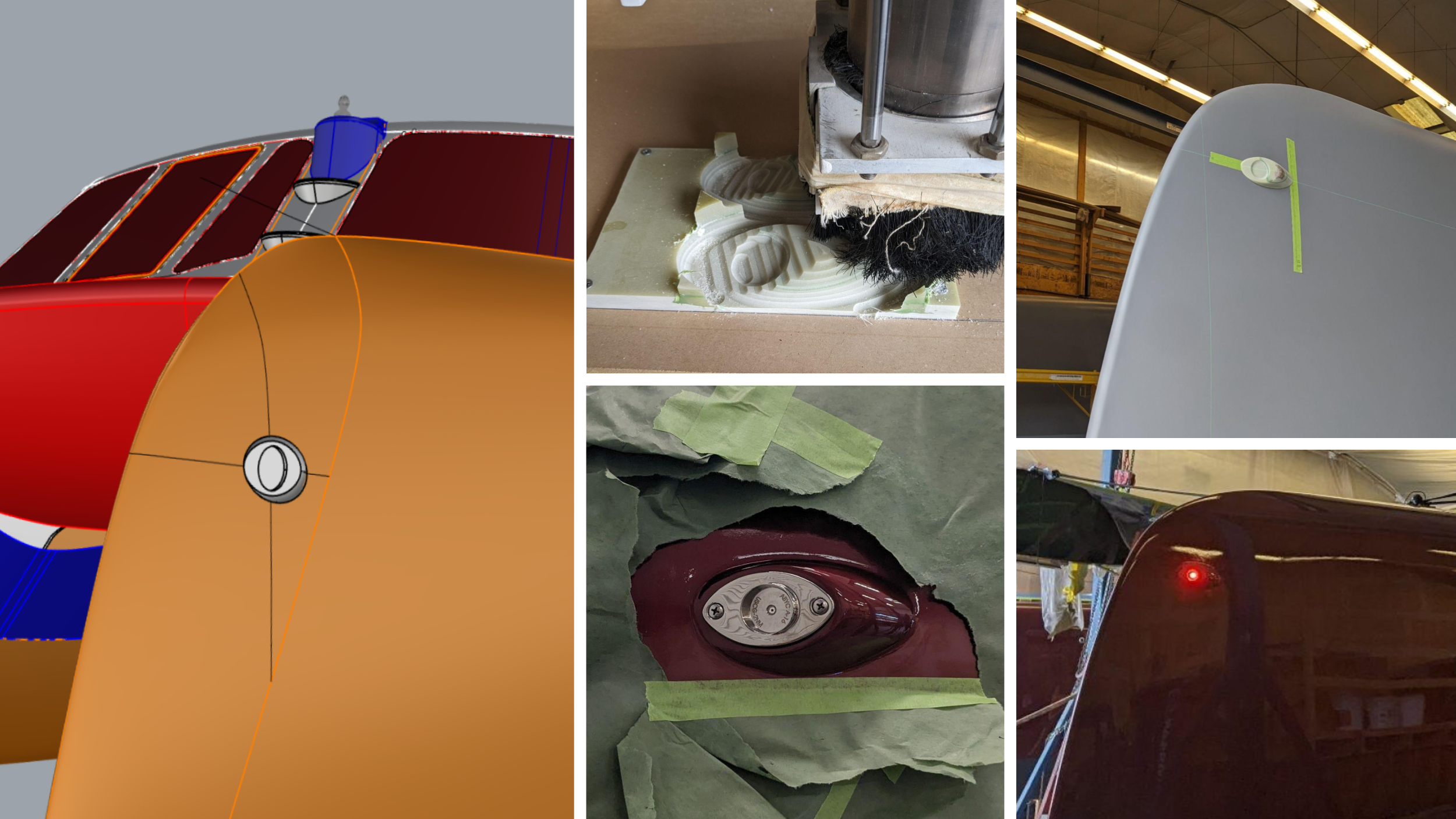
Marine navigation lights are required to comply with safety regulations and indicate a vessel’s presence and direction to others. The objective here was to integrate them in a way that met these requirements while preserving the yacht’s overall aesthetic.
Steering assembly
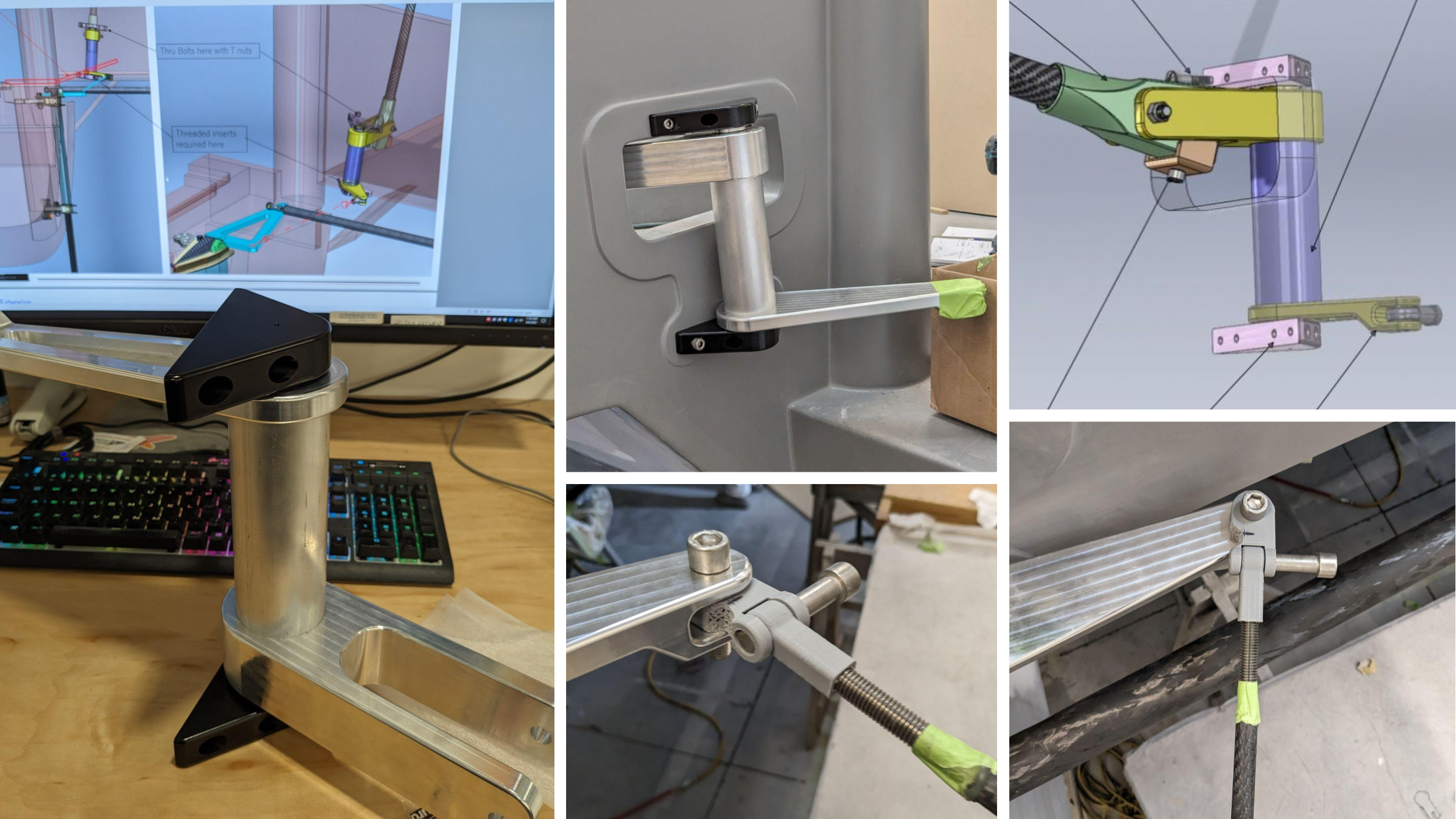
The steering assembly was a key element from a human-factors perspective. The owner opted for a tiller rather than a wheel to preserve a direct connection to the boat and its handling. While I had limited involvement in the initial design, I led the effort to analyze and resolve issues that surfaced after the steering system was developed in CAD, collaborating with engineers and designers to implement effective workarounds.
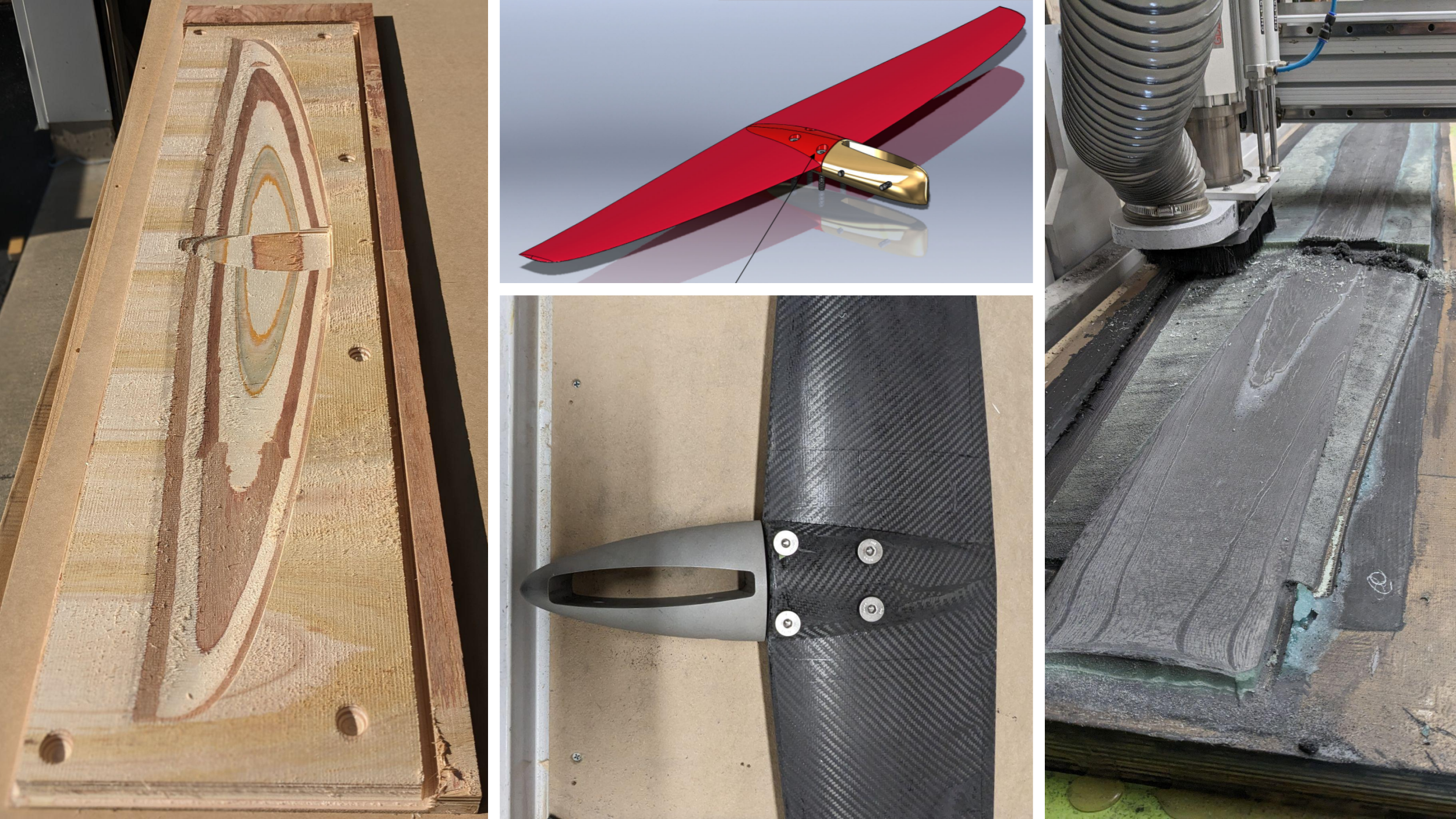
Mounted at the end of the rudder, this stabilizing wing is critical to the yacht’s performance as part of its semi-foiling design. It helps balance the bow and keep it above the water, preventing situations where the bow could dive and risk capsizing the vessel. Fabrication was complex, as the wing had to match the CAD model precisely to avoid drag or turbulence.
sTABILIZING WING